

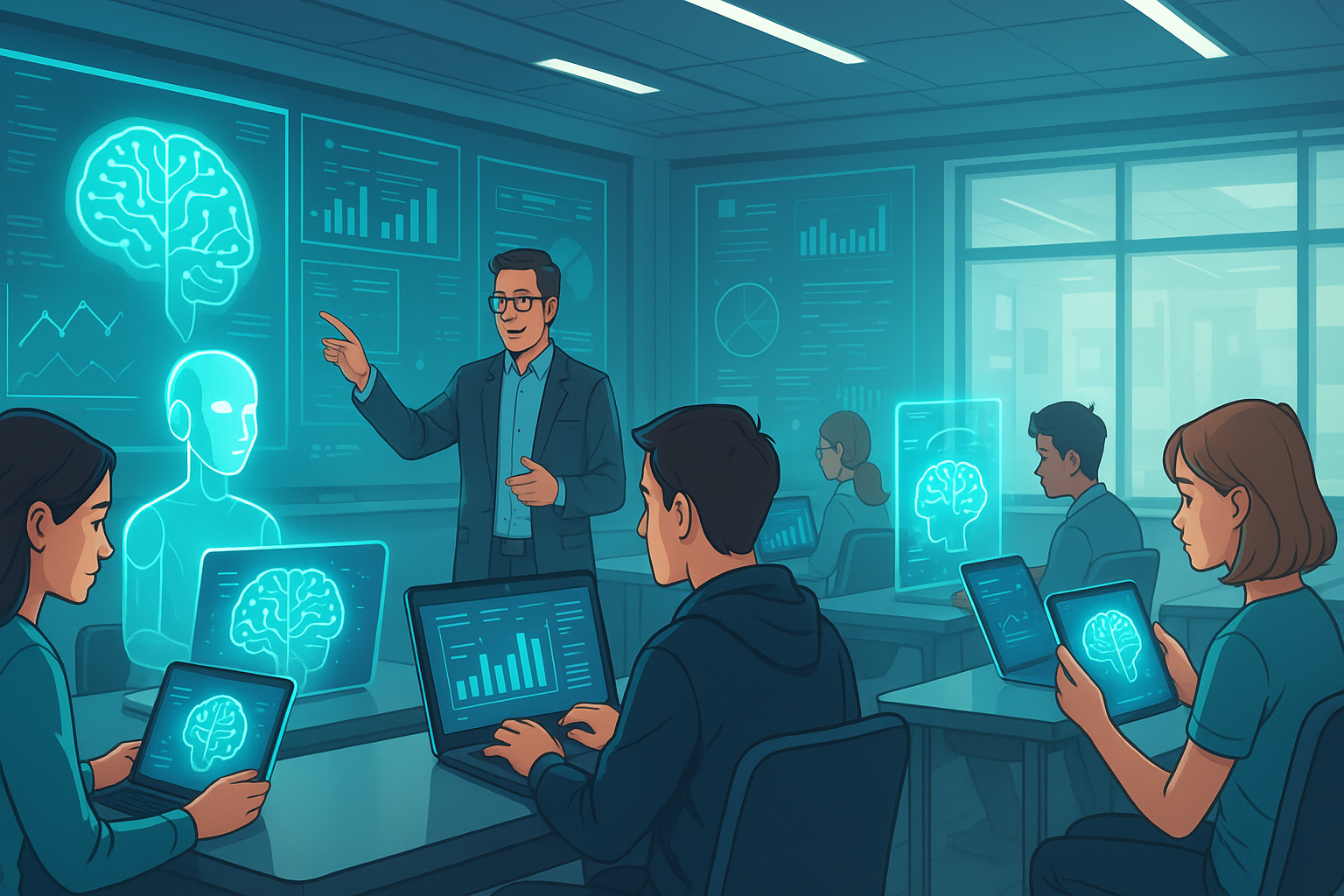
Education is no longer confined to classrooms. With the rise of digital learning, students can now access knowledge anytime, anywhere — and at their own pace. But what’s truly transforming e-learning into a personalized, efficient, and interactive experience is Artificial Intelligence (AI).
AI is reshaping how educators teach, how students learn, and how learning platforms operate. From intelligent tutoring systems to automated grading, AI tools are bringing a level of customization and efficiency that traditional education could never achieve.
In this article, we’ll explore how AI tools are revolutionizing e-learning platforms, what benefits they offer, and what the future holds for AI-driven education.
1. Personalized Learning for Every Student
One of the biggest advantages of AI in e-learning is personalization. Every learner has different strengths, weaknesses, and learning speeds. AI-powered algorithms analyze student performance and adapt lessons accordingly.
How it works:
- AI tracks progress and identifies areas where a student struggles.
- It then adjusts quizzes, assignments, and materials to match their pace.
- Platforms like Coursera, Duolingo, and Khan Academy already use AI to personalize recommendations.
This approach ensures that no student is left behind — and fast learners are constantly challenged.
💡 Example: An AI tool can detect that a student struggles with algebra and automatically suggest easier exercises or extra tutorials.
2. Intelligent Tutoring Systems (ITS)
AI-based tutoring systems act as virtual teachers, providing guidance and feedback in real-time. These systems simulate one-on-one tutoring, helping learners solve problems and understand difficult concepts.
Benefits include:
- Instant feedback without waiting for a teacher.
- Adaptive questioning that helps students think critically.
- Round-the-clock availability — perfect for online learning.
For instance, tools like Carnegie Learning use AI to guide students step-by-step through math problems, offering hints when needed.
3. Automated Grading and Feedback
Grading is one of the most time-consuming tasks for educators. AI is now automating this process with remarkable accuracy.
AI systems can evaluate multiple-choice questions, essays, and even coding assignments in seconds. Beyond grading, they can provide constructive feedback to help students improve.
Benefits:
- Saves teachers hours of manual work.
- Provides consistent, unbiased grading.
- Gives students faster insights into their performance.
💡 Example: Turnitin uses AI to detect plagiarism, while Google Classroom integrates AI tools for auto-grading quizzes.
4. Enhanced Engagement Through Gamification
AI makes e-learning fun and interactive by combining gamification with smart analytics. By rewarding progress and tracking behavior, AI ensures learners stay engaged.
Examples include:
- AI-driven quizzes that adapt difficulty levels dynamically.
- Leaderboard systems that reward consistency.
- Personalized achievement badges and motivational reminders.
Games and challenges keep learners motivated, making education feel more like a rewarding journey than a chore.
5. Smart Content Creation
AI isn’t just helping students — it’s also helping educators. Today’s AI tools can generate educational content automatically, including study guides, quizzes, and even multimedia lessons.
For example:
- Tools like ChatGPT, Jasper, and Quizlet can create summaries and question banks from existing material.
- AI can also convert text into audio, video, or interactive content, making lessons more engaging.
This saves teachers countless hours and allows them to focus more on mentoring and creativity.
6. Real-Time Language Translation and Accessibility
AI is breaking barriers for students worldwide by offering instant translation and accessibility tools.
E-learning platforms powered by AI can:
- Translate entire courses into multiple languages in real-time.
- Provide voice-to-text and text-to-speech features for visually or hearing-impaired learners.
- Simplify complex text using AI summarization tools.
This makes global education more inclusive and accessible to everyone — regardless of language or ability.
7. Predictive Analytics for Better Outcomes
AI tools use predictive analytics to forecast student performance and engagement levels.
By analyzing user data such as login frequency, quiz results, and time spent on modules, AI can identify students who are likely to drop out or underperform — allowing educators to intervene early.
Benefits:
- Reduces dropout rates.
- Helps teachers focus on students who need extra help.
- Optimizes course design for better learning outcomes.
💡 Example: EdTech companies like Coursera use predictive AI to improve course recommendations and retention rates.
8. AI Chatbots for 24/7 Support
Customer support isn’t just for online stores — e-learning platforms also benefit from it.
AI chatbots provide instant academic and technical support to students around the clock.
They can:
- Answer FAQs about assignments or deadlines.
- Guide users through the platform’s features.
- Offer motivational support and reminders.
Chatbots like IBM Watson Assistant or Drift are now being integrated into educational websites to improve student satisfaction.
9. Virtual Reality (VR) and Augmented Reality (AR) Integration
AI takes VR and AR learning experiences to the next level. These technologies create immersive, hands-on learning environments, especially for complex subjects like science, medicine, or engineering.
Examples:
- Medical students using AR to simulate surgeries.
- Geography learners exploring virtual versions of real-world locations.
- AI-powered simulations that adapt based on user performance.
With AI analyzing user actions in real-time, learning becomes more interactive, personalized, and effective.
10. Streamlining Administrative Tasks
Beyond teaching, AI is simplifying the administrative side of education.
Institutions use AI to handle:
- Enrollment management
- Attendance tracking
- Timetable scheduling
- Fee processing
This automation frees educators from repetitive tasks and improves the overall efficiency of e-learning systems.
11. Emotional Recognition and Adaptive Learning
AI can now detect students’ emotions through facial expressions or voice tone (in video-based learning).
When it senses boredom, confusion, or frustration, it can adjust the learning pace or change the teaching method — making the experience more adaptive and empathetic.
💡 Example: Platforms like Affectiva and Coursera Labs are experimenting with emotion-based adaptive learning for better engagement.
12. Data-Driven Course Improvements
AI continuously collects insights from thousands of users, helping platforms refine courses over time.
By analyzing feedback and learning outcomes, AI can suggest:
- Removing confusing sections.
- Reordering modules for clarity.
- Updating outdated materials automatically.
This ensures that content stays relevant, accurate, and aligned with learner needs.
13. Reducing Learning Gaps and Promoting Equality
AI promotes equal learning opportunities by identifying learning gaps across demographics.
For instance, if certain groups are consistently underperforming, AI helps educators adjust strategies to make learning fairer and more effective for everyone.
14. Affordable and Scalable Education
AI-driven platforms drastically reduce costs for both students and institutions.
By automating tutoring, grading, and content delivery, they can offer high-quality education at scale — making learning affordable and accessible to millions.
💡 Example: Platforms like Udemy and Coursera use AI to deliver personalized education to millions of learners worldwide — at a fraction of traditional costs.
15. The Future of AI in E-Learning
The future of AI in education is incredibly promising. As technologies evolve, we’ll see:
- Hyper-personalized learning journeys tailored to every individual.
- AI mentors capable of emotional and intellectual interaction.
- Smarter analytics that help educators design better learning experiences.
- Integration with blockchain for secure certification and student record tracking.
AI will not replace teachers — it will empower them to focus on creativity, empathy, and real human connection.
Conclusion
Artificial Intelligence is not just improving e-learning — it’s redefining it. By making education more personalized, engaging, and efficient, AI is bridging the gap between human learning and digital innovation.
The e-learning platforms that embrace AI today will lead the way in shaping the future of education tomorrow.
